Marrying Authors to their Market: A Genre Perspective
You’d think it would be easy – in the science fiction and fantasy field – to publish a book that appeals to science fiction and fantasy fans, the traditional ‘core genre market’. After all, isn’t every fantasy novel just a retelling of The Lord of the Rings and every science fiction novel just Star Wars by another name?
Thankfully, while there are undoubtedly some book-buyers who think in this way, increasingly readers are beginning to realise this is far from the truth. The science fiction and fantasy (SF/F) genre is as complex and diverse as fiction itself, and often, for a publisher in this market, finding new ways to appeal to the correct audience can be a challenge of epic proportions. Publishing a successful SF/F novel is not something you can easily do to a formula, and indeed, the measures of what make a novel a success are as varied as the houses that publish them. So how, then, do you go about finding this elusive success and packaging a novel in a way that will maximise its potential in the market?
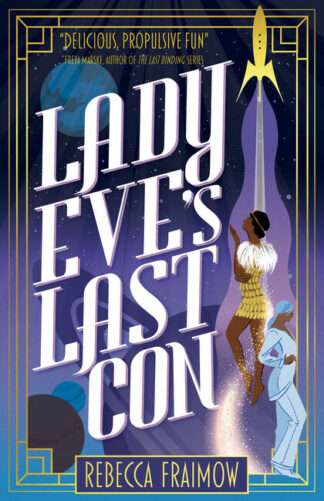
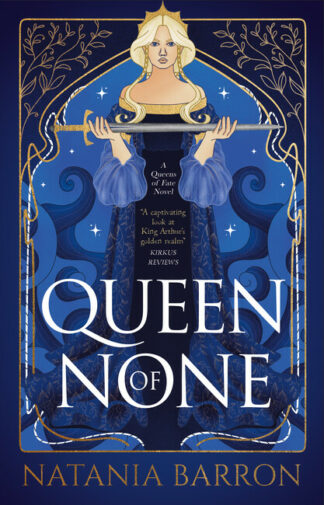
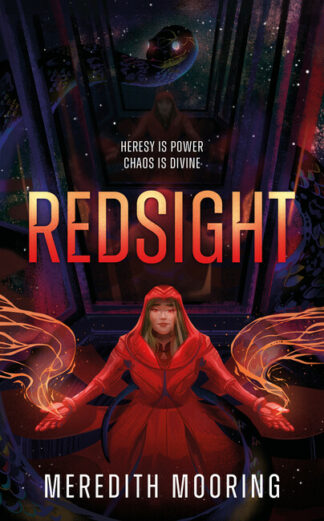
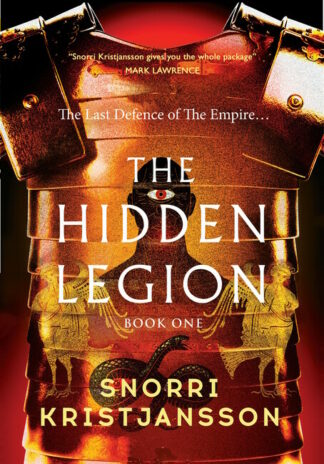
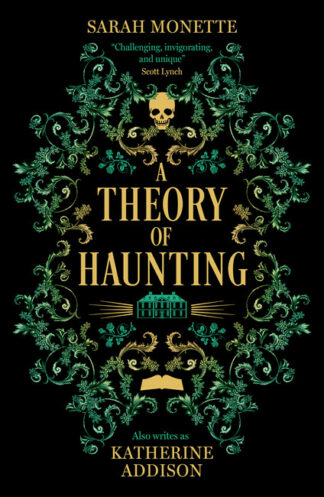
As I see it, there are currently two schools of thought – to package your SF/F novel to appeal to as wide a readership as possible, in the hope of enticing readers from other areas of the bookstore to pick it up on a whim; or to package your SF/F novel to appeal to the perceived core readership of the genre, or indeed, fans of Battlestar Galactica and Doctor Who, people who want a book with a spaceship or a wizard on the front of it.
Of course, there are risks inherent in both of these approaches. Whilst a novel that successfully transcends its genre roots will command much higher sales figures, the publisher risks alienating or losing the core audience who may not entirely empathise with the publisher’s new direction for their favourite author or sub-genre, especially if they can’t find the book on the shelves in the SF/F section of the bookshop (and this is perhaps the greater risk – if the buyer is not prepared to try the book in an atypical location in the store, you may end up with it sitting in the SF/F section anyway, but looking like it belongs elsewhere). It’s also a scarce few books that do successfully break out into the bestseller charts, so the publisher has to be aware of the odds. On the other hand, a book that sets out explicitly to capture that core audience is appealing to a much more limited readership and has little or no chance of transcending the genre and breaking out into the bestseller lists. A publisher adopting that approach has to know what they can expect to sell of a book – and make sure they’re happy with those sales numbers and profit implications.
Of course, there are no hard-and-fast rules, and there are countless examples of both of these approaches from recent years – as well as exceptions that prove the rules. There are also plenty of books on the edge of the genre, paranormal fantasies such as the Anita Blake books by Laurel K. Hamilton or historical fantasies such as the Troy novels by David Gemmell.
In setting up the Solaris imprint for BL Publishing, though, Publisher Marc Gascoigne and I decided – for better or for worse – to place ourselves directly in that second camp. The reasons for this were two-fold. Firstly, our existing imprint, the Black Library, had been successfully publishing SF/F novels for eight years – novels that tie-in to the Warhammer and Warhammer 40,000 fantasy worlds of Games Workshop. Experience had shown us that we already knew, as a business, how to package books for a niche audience – our recent range of Horus Heresy tie-in novels have sold over three hundred thousand copies combined since last April. Secondly, we believed we could see a gap emerging in the market, and we wanted to fill it.
Many genre imprints in both the UK and the US were taking the other route, packaging novels to appeal to a wider audience, focusing on getting front-of-store promotions and aiming for the bestseller lists. Sales expectations for genre novels seemed to be getting higher and higher. On the other end of the scale, a proliferation of small presses seemed to be flourishing, publishing limited run books for a small collector’s market. Essentially, at the heart of the genre, the midlist was disappearing. The result of this was that the core SF/F readership was not being as well served as it had been in the past; people who went into a high street bookshop to browse the SF/F section were not necessarily seeing those aforementioned books with wizards and spaceships on the front.
I should take this opportunity to emphatically state that this is not a comment on the sophistication or literary merit of those books, but more an approach to packaging and publishing those books to appeal to a certain section of the market. We saw this, first and foremost, because we’re fans ourselves - we make no apologies for the fact that we are our own target demographic. That, coupled with my many years spent working at Ottakar’s, meant that we had a commercial perspective from the other side of the fence – we knew we weren’t seeing enough of the books we wanted to read on the shelves in bookshops. Thankfully, due to the infrastructure provided by the Black Library, we were able to set out to do something about it.
For Solaris, this approach has so far served us proud. The list is defiantly midlist, aimed at a core readership, and as both individuals and publishers we revel in the genre, in all its aspects and forms – novels, movies, manga, comics. We celebrate our inner geeks. Although we recognise there are other successful ways to package books and appeal to readers, we’ve chosen to go in this direction. Our books look like science fiction and fantasy novels, with all the stereotypical trappings, and we’ve received a great deal of praise from both critics and readers for our celebration and support of the genre. Our lists – both Solaris and The Black Library – go from strength-to-strength, and for now, our strategy remains steadfast: we publish books for SF/F fans, for the SF/F section of the bookshop.